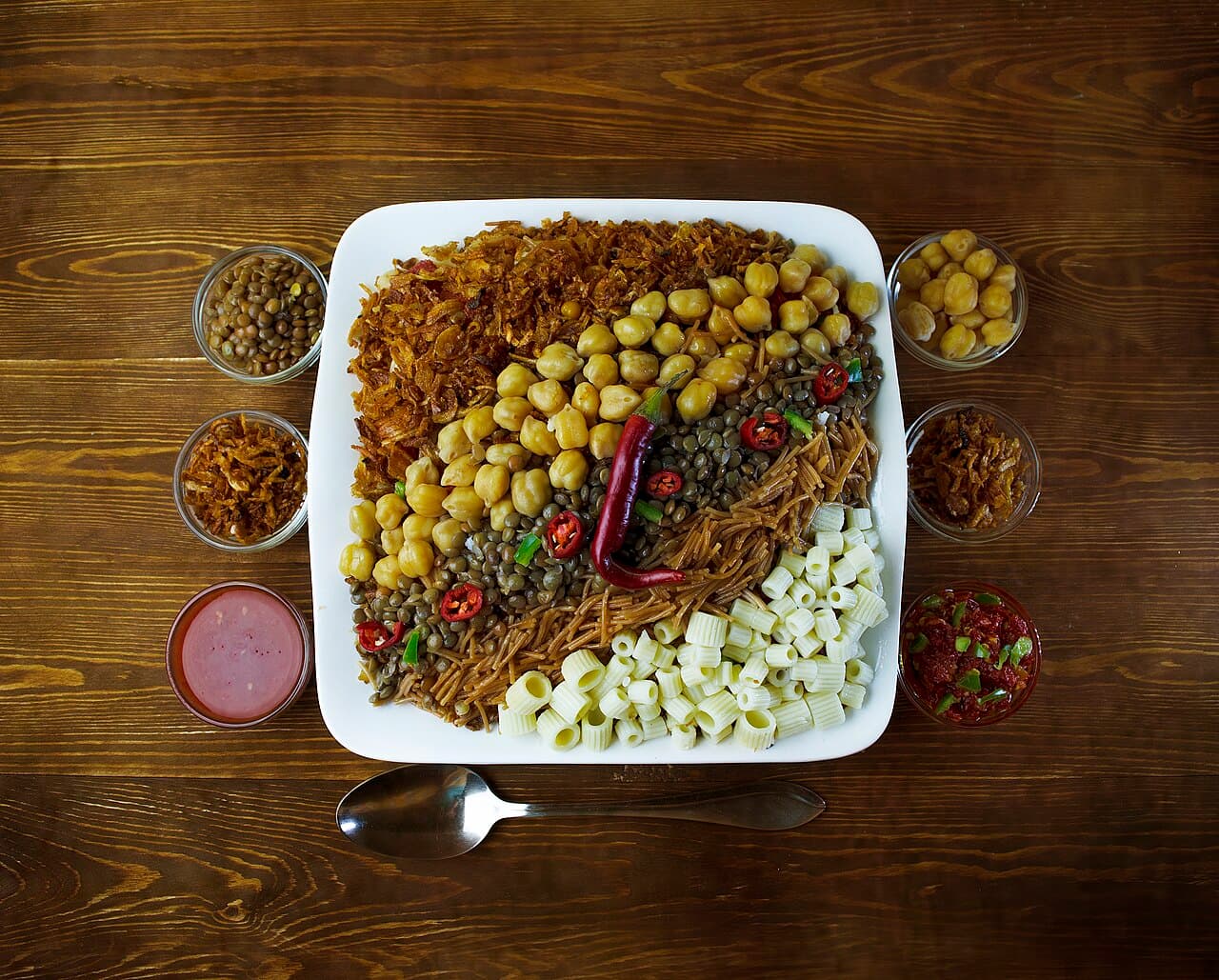
Easier than most visitors expect — Egyptian food has real vegetarian roots. Foul (stewed fava beans), koshary (lentils, rice, pasta and chickpeas), and ta'ameya (Egyptian falafel, made from fava beans rather than chickpeas) are everyday dishes, not special orders. Vegans need to ask one extra question — ghee or butter sometimes finishes a dish — but the base ingredients are naturally plant-based across the board.
Key takeaways
- Foul, koshary and ta'ameya are core, everyday Egyptian dishes that happen to be vegetarian.
- Koshary in particular is widely available, cheap, and entirely plant-based as standard.
- Vegans should ask about ghee or butter finishing a dish — it's not universal, but worth checking.
- Tourist-area restaurants are used to dietary requests; smaller local spots may need simple, direct phrasing.
Naturally vegetarian, everyday dishes
| Dish | What it is | Vegan as standard? |
|---|---|---|
| Koshary | Lentils, rice, pasta, chickpeas, tomato sauce, fried onions | Usually yes |
| Foul | Stewed fava beans, often with oil, lemon and cumin | Usually yes |
| Ta'ameya | Fava-bean falafel, Egypt's version of the dish | Usually yes |
| Baba ghanoush / hummus / tahini dips | Common mezze served with bread | Usually yes |
What to ask about
The main thing to check is whether ghee (clarified butter) finishes a rice or lentil dish — common enough to ask about, not universal enough to assume. Simply asking "no ghee, no butter" is understood in most tourist-facing restaurants.
Learn more about the food
For the fuller picture of Egyptian cuisine, including dishes that aren't vegetarian, see must-try Egyptian foods and drinks and traditional dishes in Egypt.
Frequently asked questions
Is koshary always vegan?
It's plant-based as standard, but confirm at any specific restaurant — recipes vary slightly.
Will hotels accommodate a vegan diet?
Most hotels catering to international tourists can, especially if you mention it when booking or checking in.
Reviewed September 2026.