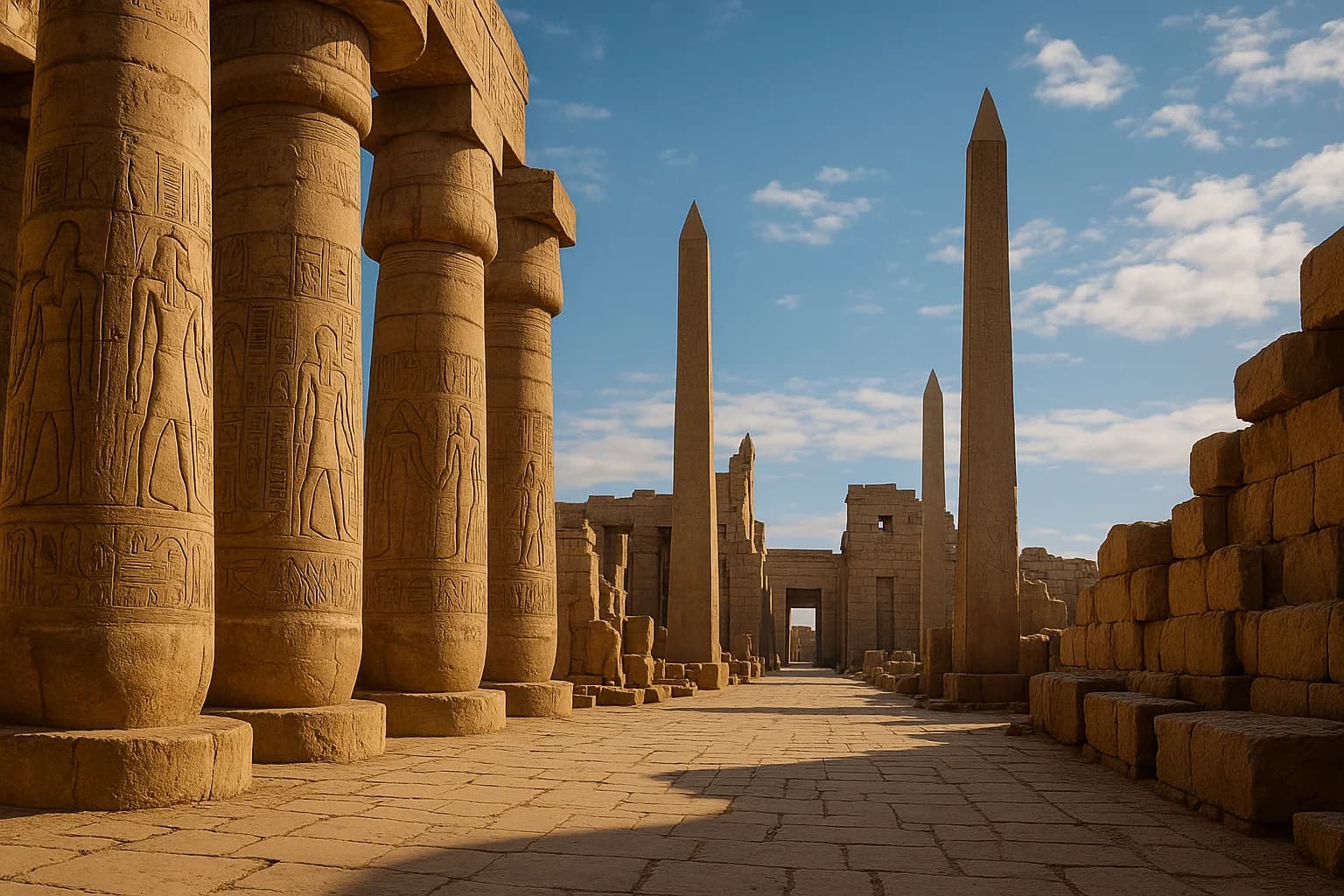
The Valley of the Kings emerged as the principal burial ground for Egypt’s New Kingdom pharaohs during the 16th to 11th centuries BCE, spanning the 18th, 19th, and 20th Dynasties. Seeking to protect their royal tombs from tomb robbers, the ancient Egyptians moved away from the grand pyramid complexes of earlier periods and began excavating hidden tombs deep within the Theban cliffs. Over 60 tombs were carved into the valley, each designed to guide the deceased pharaoh safely into the afterlife. The walls were adorned with elaborate scenes from funerary texts like the Book of the Dead, intended to ensure protection and immortality.
The most famous discovery in the Valley was the virtually intact tomb of Tutankhamun (KV62) by Howard Carter in 1922, which captivated the world with its dazzling treasures and mysterious curses. Other notable tombs include those of Seti I, Ramses VI, and Thutmose III—each renowned for their scale, decoration, and historical significance. Despite ancient and modern looting, the Valley remains a treasure trove of archaeological and artistic wonders. Ongoing excavations continue to yield new insights into the lives, deaths, and beliefs of Egypt's most illustrious rulers, making the Valley of the Kings a living monument to the ancient world.