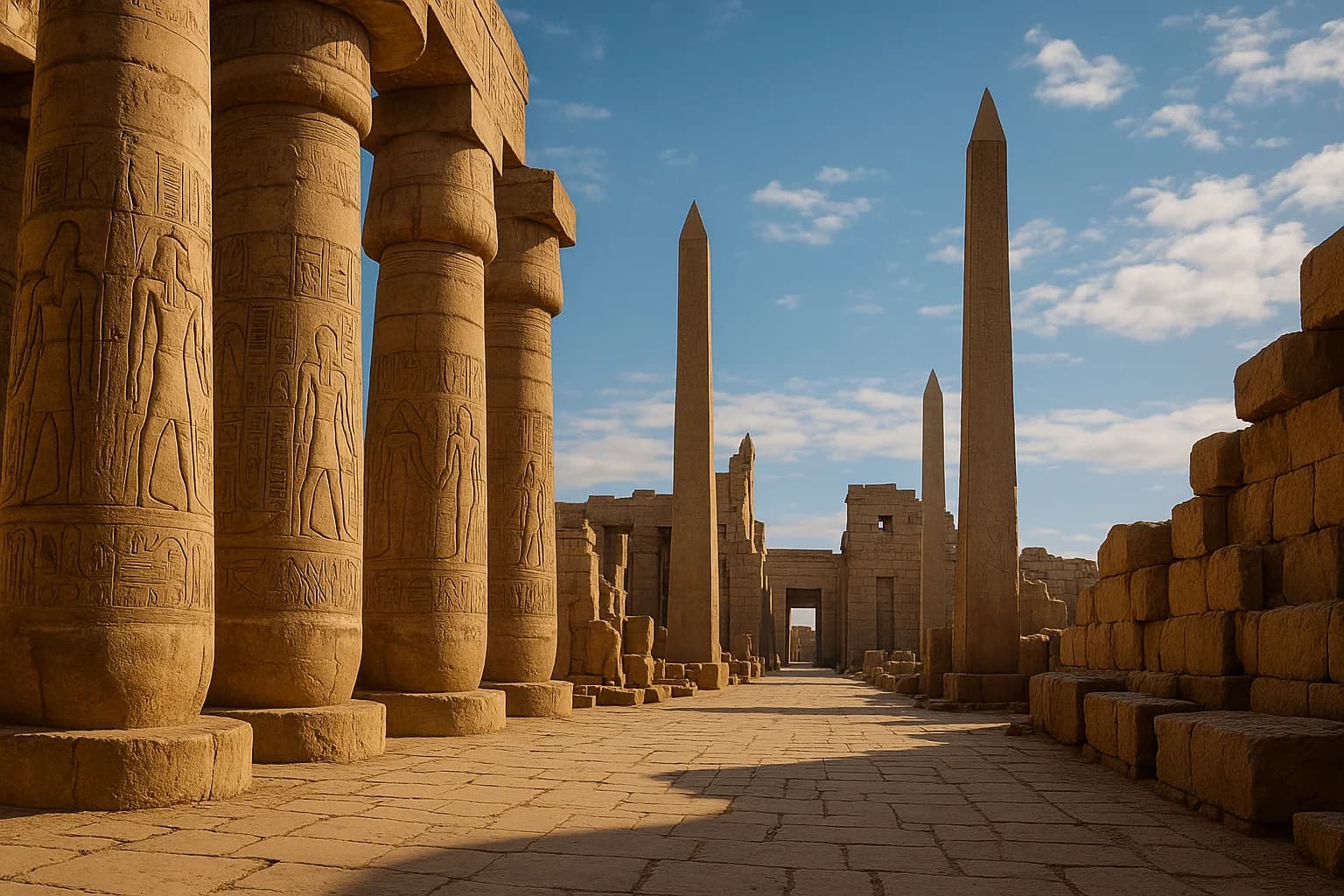
The Temple of Hatshepsut stands as one of the crowning achievements of New Kingdom architecture and an enduring symbol of female power in ancient Egypt. Commissioned by Hatshepsut during her reign (c. 1473–1458 BCE), the temple was conceived as a mortuary complex to honor her legacy and secure her place among the gods. Chief architect Senenmut designed the temple to harmonize with the dramatic cliffs of Deir el-Bahari, drawing inspiration from the nearby funerary temple of Mentuhotep II but surpassing it in both scale and artistic ambition.
The temple’s three terraces are connected by wide ramps and lined with colonnades, each adorned with detailed reliefs depicting major events from Hatshepsut’s reign. These include her divine birth, a narrative meant to legitimize her rule as pharaoh, and the celebrated trading expedition to Punt, which brought exotic goods and animals to Egypt. The temple also features chapels dedicated to Hathor and Anubis, reflecting Hatshepsut’s religious devotion and political acumen.
After Hatshepsut’s death, her stepson Thutmose III sought to erase her memory by defacing her images and inscriptions throughout Egypt, including at her mortuary temple. Despite this, much of the artwork and structure survived, and the temple was later used by other dynasties and even converted into a Christian monastery. Rediscovered and restored in the 19th and 20th centuries, the Temple of Hatshepsut today stands as a testament to the ambition, innovation, and resilience of Egypt’s only major female pharaoh, drawing visitors from around the world to marvel at its beauty and significance.