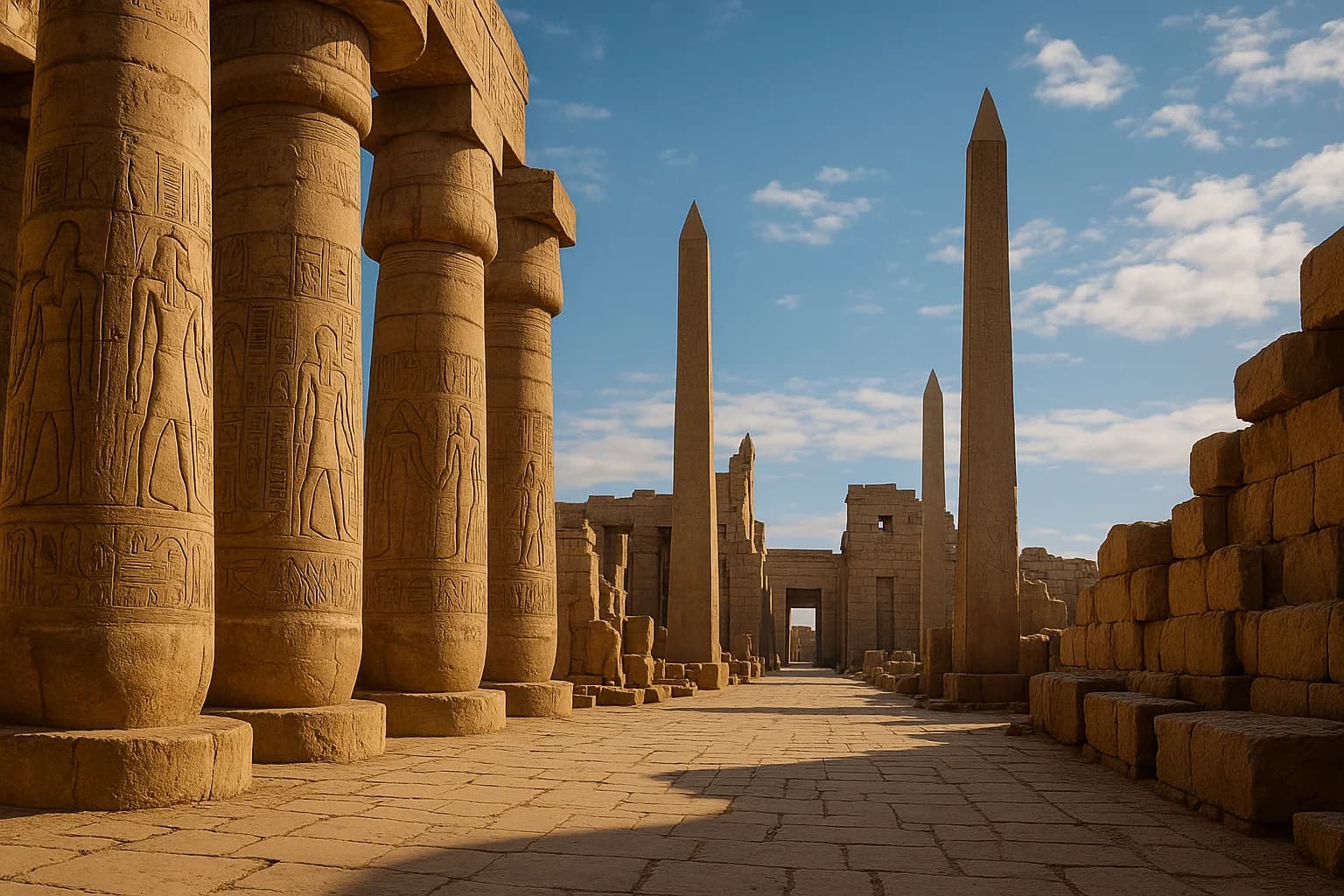
Kom Ombo Temple was constructed during the Ptolemaic dynasty, primarily between 180 and 47 BCE. Its most distinctive feature is the dual dedication to Sobek, the crocodile god associated with fertility and the Nile, and Haroeris (Horus the Elder), the falcon-headed god of the sky and kingship. The temple’s perfectly symmetrical design reflects this duality—each side contains its own halls, sanctuaries, and chapels, allowing worshippers to honor both deities simultaneously.
The site was chosen for its proximity to crocodile-inhabited waters, and Sobek’s presence was believed to ensure the Nile’s health and fertility. Over time, Kom Ombo became a major religious center, attracting pilgrims and officials from across Egypt. The temple’s reliefs not only depict mythological scenes but also provide rare glimpses into ancient medicine, with detailed carvings of surgical tools and healing rituals still visible today.
Kom Ombo was later expanded and modified by Roman emperors, integrating additional chapels and decorations. The surrounding area yielded numerous mummified crocodiles, many of which are now displayed in the on-site Crocodile Museum. Despite centuries of erosion from the Nile and earthquakes, Kom Ombo remains remarkably well-preserved, offering visitors a vivid snapshot of Ptolemaic religious life and architectural innovation.